
Layer by Layer: How Germ Layer Biology is Reshaping Respiratory Therapeutics
From embryonic origins to engineered lungs, how understanding the ectoderm, mesoderm, and endoderm is driving the next wave

Introduction: Back to the Blueprint
Long before breath is drawn, the blueprint for the human respiratory system is inked in the early embryo.
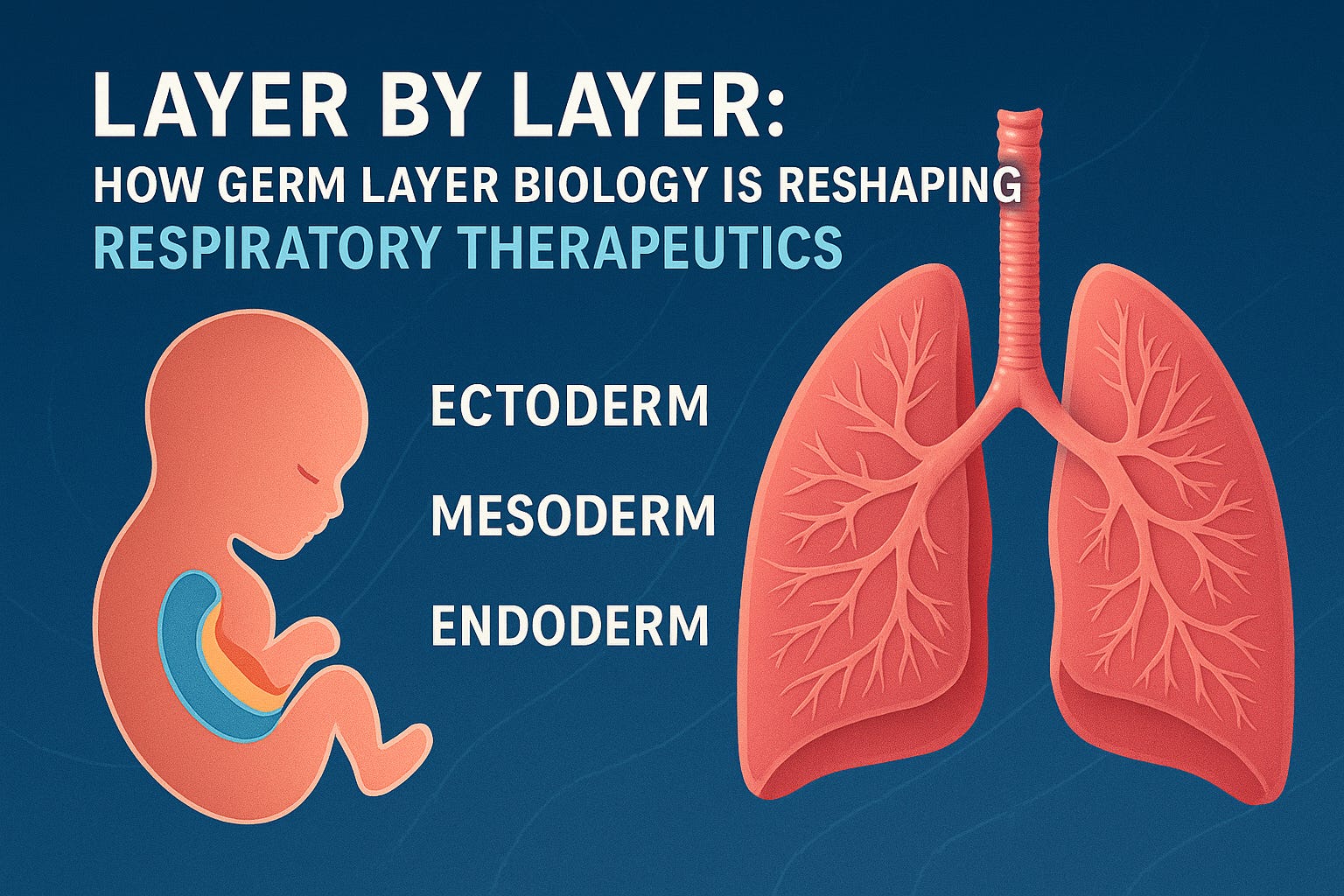
At just three weeks of development, a flat sheet of embryonic cells rolls and folds into three germ layers - the ectoderm, mesoderm, and endoderm. These layers are more than just developmental trivia; they define our body’s architecture, and in adulthood, they quietly shape everything from cancer susceptibility to how our organs respond to injury.
Now, in a new era of molecular therapeutics and regenerative medicine, scientists are looking back to these developmental origins to unlock new treatments - especially for the lungs and the broader respiratory system.
The Three Germ Layers at a Glance
Ectoderm: Forms the nervous system, skin, and parts of the cranial structures. Think: neurons, epidermis, nasal epithelium.
Mesoderm: Gives rise to muscle, bone, the cardiovascular system, and connective tissues. Critical for structures like the diaphragm, pleura, and vasculature that support lung function.
Endoderm: The deepest layer - and the one that builds the entire epithelial lining of the respiratory tract, from the trachea down to the alveoli.
Understanding how these layers interact, communicate, and evolve into mature organs is no longer just the domain of developmental biologists. It’s now the scaffold upon which cell therapy, organoid engineering, and targeted respiratory therapeutics are being built.
Endoderm: The Respiratory Tract’s Root System
The lungs, trachea, bronchi, and alveoli all stem from the anterior foregut endoderm.
Modern pulmonary therapeutics are starting to reflect that. For example:
Organoid models of the lung are now derived from induced pluripotent stem cells (iPSCs) directed toward endodermal fate. These mini-lungs are being used to study:
Cystic fibrosis
Viral infections (e.g., SARS-CoV-2)
Fibrotic lung disease
Gene therapy trials for diseases like surfactant protein deficiency are targeting endoderm-derived alveolar cells using lipid nanoparticles and viral vectors.
New single-cell atlases of the lung show distinct transcriptomic profiles across endodermal epithelial lineages, which could guide therapies in chronic bronchitis, COPD, and asthma.
Mesoderm: The Silent Support System
While the endoderm builds the breathing tubes, the mesoderm gives those tubes function and form. This layer contributes:
The pulmonary vasculature, now a major target in therapies for pulmonary hypertension
The diaphragm, whose dysfunction can lead to ventilatory failure
The pleura and stroma, involved in lung cancer metastasis and fibrotic remodeling
Emerging therapeutics are starting to target mesodermal crosstalk with the lung epithelium:
Antifibrotics like nintedanib and pirfenidone modulate mesenchymal signaling in idiopathic pulmonary fibrosis (IPF)
CAR-T therapies targeting fibroblast activation protein (FAP) are being explored for mesoderm-derived fibrotic stroma in lung cancer and fibrosis
Mesodermal endothelial cells are being engineered for lung bio-scaffolds, potentially enabling lab-grown lungs for transplant
Ectoderm: Where Air Meets Nerve
Though the ectoderm doesn’t directly build the lungs, it gives rise to:
The olfactory epithelium, crucial for smell - and a key site of viral entry and early infection, as seen in COVID-19
Neural crest derivatives that contribute to autonomic innervation of the airways, influencing asthma and chronic cough
Cutaneous and mucosal barriers, which interact with airborne pathogens and pollutants
Therapies focused on ectodermal-respiratory interactions include:
Sensory neuron modulators being tested for chronic refractory cough (e.g., P2X3 antagonists)
Neuro-immune axis studies in asthma, where vagal tone and airway hyperresponsiveness are linked
Gene therapy vectors delivered via nasal mucosa (an ectodermal derivative), allowing noninvasive respiratory gene delivery
The Regenerative Frontier: Layer-Informed Therapies
Understanding the germ layer origins of respiratory tissue is guiding next-generation interventions:
🧫 Lung Organoids and iPSC Models
Stem cells are directed through layer-specific developmental cues (e.g., Activin A for endoderm induction) to generate tissue-relevant organoids
These are being used to test cystic fibrosis drugs, screen anti-fibrotics, and model viral replication dynamics
🧬 Molecular Therapeutics Targeting Developmental Pathways
Wnt, BMP, and FGF signaling, central to germ layer specification, are being reactivated in adult diseases - offering a handle for regenerative reprogramming
In lung fibrosis, trials are testing small molecules that modulate TGF-β and Wnt pathways
🫁 Tissue Engineering
Entire lung lobes are being bioengineered using decellularized scaffolds repopulated with cells derived from all three germ layers
Clinical use remains aspirational - but trials in rodents and primates have shown partial oxygen exchange capability
Conclusion: Building Better Lungs from the Blueprint Up
In many ways, the future of respiratory medicine lies in remembering its embryonic past. By decoding how the ectoderm, mesoderm, and endoderm contribute to respiratory structure and function, we gain more than anatomical insight - we gain a roadmap for molecular therapeutics.
Whether through gene editing in endoderm-derived cells, targeting mesodermal fibrosis, or modulating ectodermal nerves, germ-layer biology is emerging as a compass guiding personalized, regenerative care for chronic and acute respiratory diseases.
The blueprint has always been there. Now, we’re learning to read - and rewrite - it.